The Future of Modern Education | Classifyr
Education is rapidly evolving with technology
transforming traditional teaching methods
into more interactive and engaging learning
experiences. One of the biggest innovations
in modern education is the smart
classroom. It combines digital
tools, internet connectivity, and advanced
teaching technologies to enhance both
teaching and learning processes.
At Classifyr,
we believe smart classrooms are shaping the
future of education by making learning more
efficient, engaging, and accessible for
students and educators.
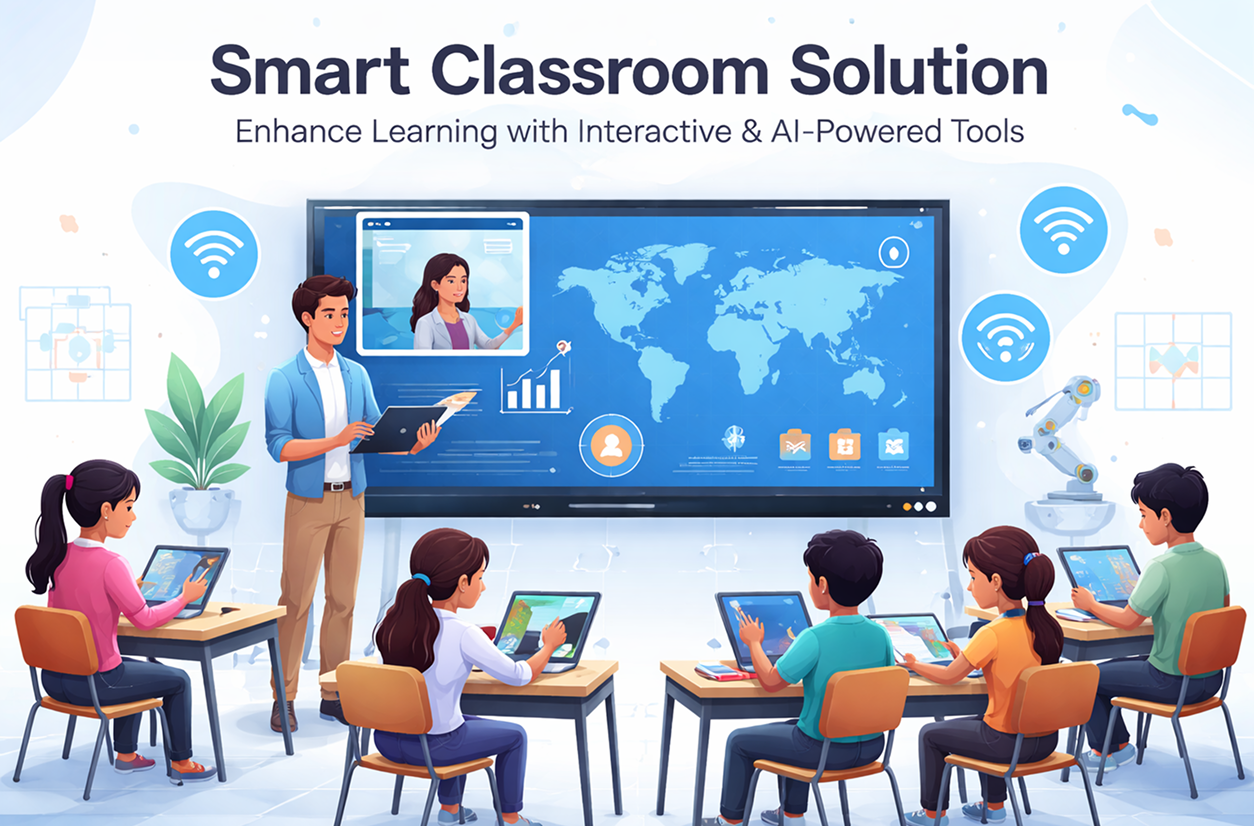
A smart classroom is a technology-enabled
learning environment that uses digital
devices, multimedia content, and
internet-based tools to improve classroom
interaction and knowledge delivery. Unlike
traditional classrooms, smart classrooms
focus on interactive learning rather than
one-way teaching.
Smart classrooms typically use tools like:
- Interactive whiteboards
- Digital projectors
- Learning management systems
- Online collaboration platforms
- Video conferencing tools
- Cloud-based content sharing
Key Features of Digital Classrooms
Interactive Learning Environment
Smart classrooms encourage student
participation through visual
presentations, videos, quizzes, and
interactive sessions. Students can
engage directly with learning materials,
improving understanding and retention.
Digital Content and Multimedia
Teachers can use videos, animations,
presentations, and simulations to
explain complex concepts more
effectively. This makes learning more
engaging compared to traditional
textbooks.
Real-Time Collaboration
Students and teachers can communicate
instantly, share resources, and
collaborate on assignments through
digital platforms, creating a more
connected learning environment.
Remote Learning Capabilities
Smart classrooms enable online classes
and virtual learning, allowing students
to learn from anywhere. This ensures
education continuity even during
disruptions.
Automated Assessment and Feedback
Technology allows teachers to conduct
online tests, track student performance,
and provide instant feedback, saving
time and improving accuracy.
With the rise of digital transformation,
smart classrooms are no longer
optional—they are becoming essential.
Educational institutions worldwide are
adopting technology-driven teaching
methods to prepare students for a
digital future.
Smart classrooms help students develop:
- Digital literacy skills
- Critical thinking abilities
- Problem-solving skills
- Collaboration capabilities
- Technical knowledge
These skills are essential for success in
today’s competitive world.
The Future of Smart Classrooms
The future of education will continue to
evolve with technologies like artificial
intelligence, virtual reality, and
adaptive learning systems. Smart
classrooms will become more advanced,
personalized, and immersive, creating
highly engaging learning experiences.
Educational institutions that adopt smart
classroom technology early will have a
significant advantage in delivering
quality education.
Conclusion
Smart classrooms are revolutionizing the
education sector by combining technology
with traditional teaching methods. They
enhance student engagement, improve
learning outcomes, and prepare learners
for the digital age.
At Classifyr, we support
innovative educational solutions that
empower institutions to adopt modern
learning technologies and create smarter
learning environments.
As technology continues to advance, smart
classrooms will play a vital role in shaping
the future of education.
For more information please feel free to
visit our website www.classifyr.in